Sitting Still, Getting Well: The Forgotten Therapy of the American Front Porch
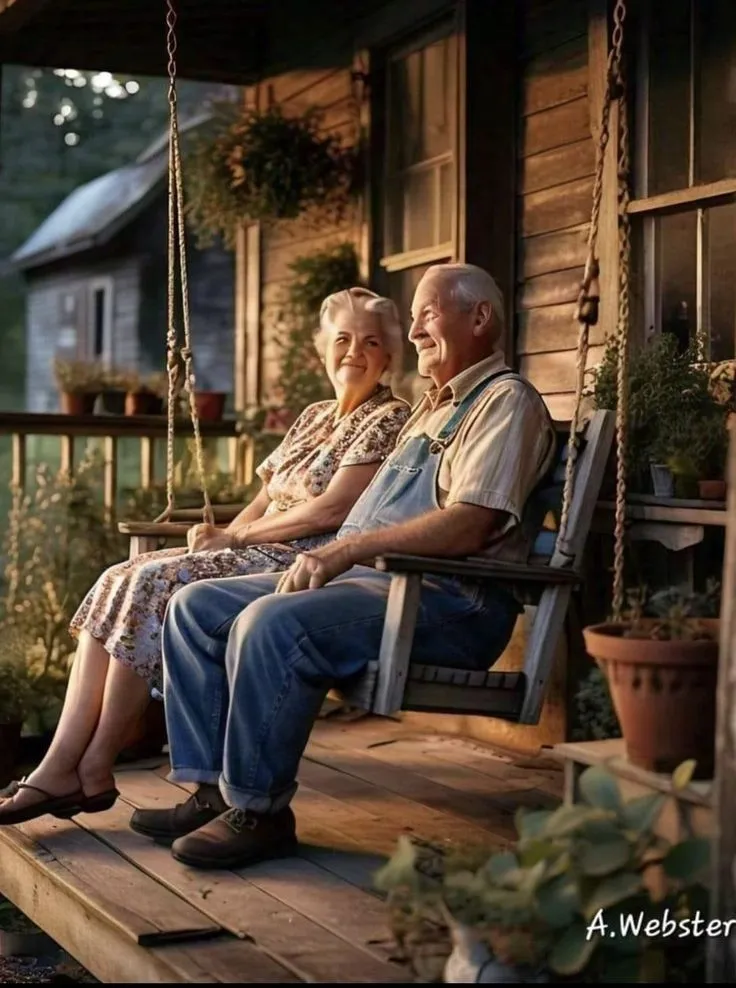
Photo: elderly couple sitting on vintage American front porch summer evening, via i.pinimg.com
Somewhere between the invention of central air conditioning and the arrival of the 24-hour news cycle, Americans stopped sitting on their front porches. It didn't happen overnight. It crept up slowly — first the television pulled families inside, then the internet anchored them to their desks, and finally the smartphone made sure there was never a quiet moment left unoccupied. But what we lost when we retreated indoors wasn't just a charming architectural feature. We lost something that, it turns out, was doing a lot of heavy lifting for our mental health.
In the early twentieth century, the front porch wasn't a design flourish. It was infrastructure. Nearly every home built between the 1880s and the 1940s had one, and families used them the way we now use therapists, fitness trackers, and social media — to decompress, connect, and make sense of the day. Nobody called it a wellness practice. They just called it sitting outside.
The Architecture of Calm
There's a reason porch culture thrived in an era before modern mental health care. The porch occupied a specific psychological space — literally and figuratively. It wasn't inside the house, where domestic responsibilities loomed, but it wasn't fully in the public world either. It was a threshold, a in-between zone where the nervous system could finally exhale.
Neuroscientists today have a term for the kind of mental state that threshold space encourages: soft fascination. It's the relaxed, low-effort attention you give to something mildly interesting — a neighbor walking a dog, leaves moving in the wind, a kid on a bicycle. Unlike the hard focus required by screens or work tasks, soft fascination allows the brain's default mode network to activate. That's the neural circuitry responsible for self-reflection, emotional processing, and the kind of quiet problem-solving that happens when you stop trying so hard. Your great-grandmother didn't know what a default mode network was. But every evening when she pulled her chair to the porch rail and watched the street go by, she was giving hers a full workout.
The contrast with modern screen-based relaxation is stark. Scrolling through social media or watching streaming content might feel like rest, but the brain is actually working — parsing rapid visual information, responding to emotional triggers, making micro-decisions about what to watch next. It's stimulation dressed up as downtime. The porch offered something genuinely different: unscripted, unmonitored, unplugged time in which nothing was demanded of you.
More Than Just Fresh Air
The mental health benefits of porch-sitting weren't limited to what was happening inside people's heads. The social architecture of the porch was just as important.
Front porches faced the street by design. When you sat on yours, you were visible and available — not in a performative way, but in the easy, low-stakes way of a neighbor who might wave, stop for a five-minute chat, or simply nod as they passed. Researchers who study social connection make a distinction between close relationships and what they call "weak ties" — the casual acquaintances, familiar faces, and brief exchanges that fill out the fabric of daily life. Weak ties, it turns out, are surprisingly powerful predictors of wellbeing. Communities with more of them report lower rates of anxiety and depression. The front porch was a weak-tie generator of the highest order.
Compare that to how most Americans experience their neighborhoods today. We move from house to garage to car to office and back again, often going days without an unplanned human interaction. The isolation that many people describe as a modern epidemic isn't just a product of busy schedules — it's a product of architecture and habit. We built the porches away, and we took the casual contact with them.
Heat, Light, and the Biology of Being Outside
There's also the simple, underappreciated fact that porch-sitting put people outside. Not exercising, not gardening, not doing anything in particular — just outside. And that mattered more than anyone realized.
Natural light exposure in the morning and early evening regulates circadian rhythms, the internal clocks that govern sleep, mood, and hormone production. Before electric lighting disrupted the body's relationship with the sun, Americans were getting regular doses of outdoor light during the exact windows when it's most biologically beneficial. The evening porch sit, in particular, offered exposure to the warm, lower-angle light of late afternoon — the kind that signals to the body that the day is winding down and sleep is approaching. It was a natural melatonin cue that nobody had to think about.
And then there's the sensory dimension. Birdsong. The smell of cut grass or rain on warm pavement. A breeze against skin. These aren't trivial pleasures — they're inputs that the human nervous system evolved over millennia to find regulating. Studies on nature-based stress recovery consistently show that even brief, passive exposure to natural environments lowers cortisol, reduces blood pressure, and improves mood. The front porch delivered all of this for free, every single day, without a subscription or a commute to a trailhead.
Reclaiming the Ritual
The good news is that this particular piece of old-fashioned wisdom doesn't require a renovation project or a lifestyle overhaul. You don't need a Victorian wraparound porch to get the benefits. A stoop, a balcony, a folding chair in the driveway, or a bench in the backyard will do the job.
The key is the intention behind it. This isn't about checking your phone in the fresh air. It's about deliberately choosing unstructured outdoor time — twenty minutes, maybe thirty, with no agenda beyond being present in a semi-public space. Leave the earbuds inside. Let your eyes wander. If a neighbor passes, say hello. If nothing happens, let nothing happen.
Some people find it useful to build the habit around an existing ritual — a morning coffee, an after-dinner wind-down, the last light before sunset. The old-timers who made porch-sitting a daily institution weren't doing it because they'd read about the neuroscience. They were doing it because it felt good, and because the culture around them reinforced it as normal. Rebuilding that habit individually, in an age when every quiet moment is colonized by a notification, takes a little more deliberate effort. But the underlying biology hasn't changed. The porch still works the same way it always did.
The Simplest Prescription
There's something almost embarrassingly straightforward about this particular piece of wellness wisdom. No supplements, no equipment, no expert guidance required. Just a chair, some outdoor air, and the willingness to sit with the world for a little while without trying to optimize it.
America's front porches didn't disappear because they stopped working. They disappeared because we got distracted by shinier, louder alternatives. But the quiet therapy they offered — the soft attention, the casual connection, the unhurried time between the private world and the public one — is still available to anyone willing to drag a chair outside and stay a while.
Your nervous system will remember what to do. It never forgot.