Porches, Neighbors, and the Art of Talking It Out: America's Original Mental Health System

Photo: Unknown, CC0, via Wikimedia Commons
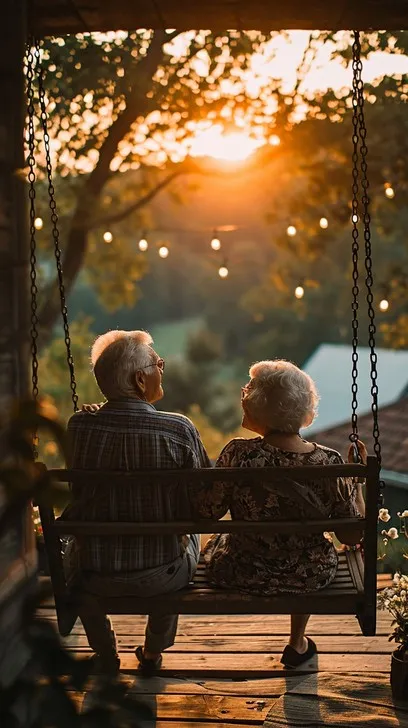
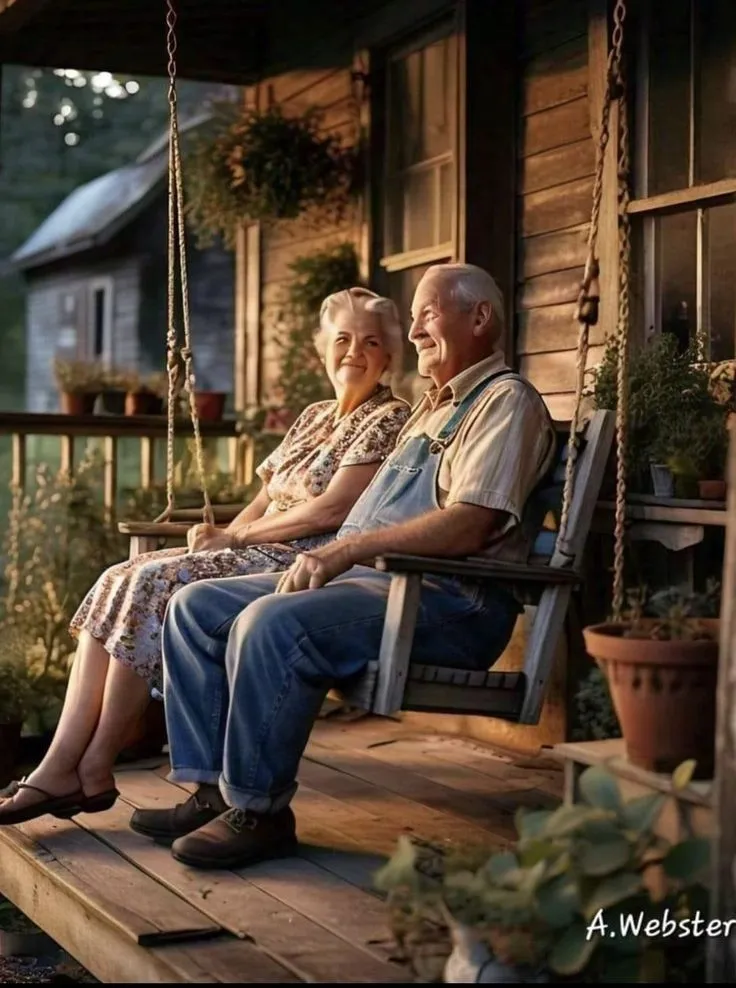
There's a scene that used to be common across small-town America — and not so long ago, either. An older woman sitting on a porch swing, a younger neighbor pulling up a chair, and the two of them talking. Not about anything in particular, maybe. A hard week at work. A fight with a husband. Worry about a kid who wasn't sleeping right. By the time the conversation wound down and the screen door creaked shut, something had shifted. Nobody called it therapy. Nobody needed to.
For most of American history, that kind of informal emotional processing was just called life. And it worked — maybe not perfectly, but in ways we're only beginning to measure with any scientific rigor.
Before the Diagnosis, There Was the Kitchen Table
The medicalization of mental health in the United States is a relatively recent development. Widespread access to psychiatry, clinical psychology, and talk therapy as we know it today didn't really take hold until the mid-twentieth century. Before that, most Americans didn't have a therapist — they had a grandmother, a pastor, a neighbor who'd lived through harder things and was willing to sit with you while you figured yours out.
Multigenerational households were the norm, not the exception. In 1900, roughly 57 percent of American adults over 65 lived with family members. That kind of constant, layered proximity meant something important: you were rarely alone with your thoughts for long. Grief had company. Anxiety got talked down. The intergenerational mix — grandparents, parents, kids, sometimes aunts and uncles all under one roof — created a living archive of human experience that younger members could draw on without even realizing they were doing it.
Elders didn't dispense wisdom from a clinical remove. They did it while shelling beans, hanging laundry, or sitting on the back steps after supper. The context was ordinary. That ordinariness was part of what made it safe.
The Psychological Power of Being Witnessed
Modern psychology has a term for what those porch conversations were doing: co-regulation. The idea is that human nervous systems are deeply social — that being in calm, connected proximity to another person can literally help regulate our own stress responses. It's why babies stop crying when they're held, and why adults feel measurably calmer after a good conversation with someone they trust.
Before anyone knew what cortisol was, Americans were intuitively managing it. Neighborhood life created the conditions for co-regulation constantly and casually. You saw your neighbors every day. You knew their kids' names and their parents' health problems and whether their garden was doing well this year. That density of familiarity built a kind of ambient psychological safety that's genuinely hard to recreate in a fifty-minute clinical session.
Storytelling was central to all of it. Older family members shared accounts of hardship — the Depression, a lost pregnancy, a farm that didn't make it — not to dramatize suffering but to contextualize it. We've been through worse. Here's how it went. Here's what helped. That kind of narrative transmission served as a form of inherited resilience, passing down not just coping strategies but the implicit message that difficulty was survivable.
When the Porch Emptied Out
The shift happened gradually, then all at once. Air conditioning pulled families indoors. Television replaced conversation as the evening's main event. Suburban design — wider lots, attached garages, cul-de-sacs that discouraged foot traffic — made casual neighbor interaction structurally harder. And as nuclear households replaced multigenerational ones, the built-in support network of elders shrank or disappeared entirely.
By the 1970s and '80s, Americans were increasingly isolated in ways that were new to the culture. Mental health struggles that once would have been absorbed and addressed within a community network were now more likely to go unaddressed — or to route through formal clinical systems that not everyone could access or afford.
This isn't a criticism of professional mental health care, which has helped millions of people and continues to do so. It's just worth naming what was lost in the transition: a dense, daily, low-stakes infrastructure for emotional support that didn't require an appointment, a copay, or a diagnosis.
What Social Prescribing Is Actually Rediscovering
Here's the quietly interesting part: some of the most forward-thinking corners of modern public health are essentially trying to rebuild what those porches once provided.
"Social prescribing" — a practice that originated in the UK and is gaining traction in parts of the US — involves healthcare providers formally recommending social connection as a health intervention. Joining a community garden. Attending a local storytelling circle. Participating in a neighborhood walking group. The underlying logic is the same logic that governed life on a 1940s block: human connection is not a luxury addition to health. It is health.
Community health initiatives in cities like Detroit, Cleveland, and rural Appalachian towns have started embedding "community health workers" — often trusted local figures rather than clinical professionals — into neighborhoods specifically to provide the kind of relational support that formal healthcare can't easily replicate. It's a modern version of the neighbor who knew when you needed to talk and showed up with a pie.
Even the resurgence of interest in multigenerational living — driven partly by housing costs but embraced by many for its relational benefits — reflects a growing recognition that the old arrangement had something going for it.
Bringing It Back, One Conversation at a Time
You don't need to wait for a public health initiative to start reclaiming some of this. The practices that made front-porch culture so psychologically nourishing are accessible in smaller ways right now.
Intentional conversation — the kind where you actually ask how someone is doing and mean it — is a skill, and like most skills, it gets better with practice. Choosing to linger after a neighborhood event rather than heading straight home. Calling an older relative not for any particular reason but just to hear their voice and see what they remember. Creating low-key, regular social rituals — a weekly dinner, a standing walk with a friend — that don't require any special occasion to justify.
None of this replaces professional support when professional support is what's needed. But it fills in the space around it, the daily texture of feeling known and accompanied, that no amount of therapy hours can fully substitute for.
Our great-grandparents didn't have a word for emotional wellness. They had something better: a whole neighborhood full of people who noticed when you seemed off and sat with you until you felt steadier. That's old wisdom. And it turns out it holds up pretty well.