How Americans Slept Before the Algorithm Took Over: Lessons from Victorian Bedtime Culture
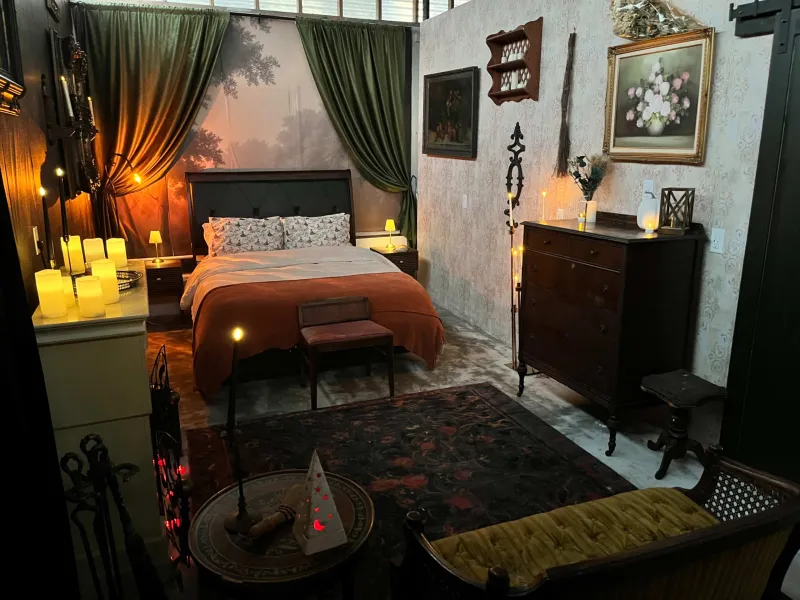
Photo: Victorian bedroom candlelight herbal tea vintage nightstand, via img.peerspace.com
Somewhere between the invention of the light bulb and the launch of the iPhone, Americans forgot how to sleep. Not just sleep — really sleep. The deep, uninterrupted, wake-up-feeling-human kind that your great-great-grandmother probably took completely for granted.
Today, roughly one in three American adults doesn't get enough sleep, according to the CDC. We've thrown money at the problem — weighted blankets, sleep trackers, melatonin gummies shaped like little bears — and yet the crisis keeps deepening. Meanwhile, the Victorians, who had none of our technology and arguably far more stress, seemed to manage just fine. So what did they know that we don't?
Turns out, quite a lot.
The Body Knows What Time It Is (If You Let It)
Before Thomas Edison's electric light became a household fixture in the late 1800s, most Americans structured their evenings around natural darkness. When the sun went down, activity slowed. This wasn't just a cultural preference — it was biology at work. The human body produces melatonin in response to darkness, and for most of human history, nightfall was a reliable signal that sleep was coming.
Victorian households typically retired between 9 and 10 p.m., well ahead of the midnight scrolling sessions that define modern evenings. Waking with or shortly after sunrise was equally common. This alignment with the sun — what we now call circadian rhythm entrainment — is something sleep researchers are actively trying to restore in their patients today. The Victorians just called it Tuesday.
If you've ever spent a week camping and noticed you started falling asleep earlier and waking up sharper, you've experienced this firsthand. Your body hasn't changed. The environment has.
The Cool Room Wasn't an Accident
Victorian bedrooms were deliberately kept cool — not because central heating didn't exist (it did, in wealthier homes), but because cold sleeping quarters were considered essential to good health. Medical texts from the era frequently warned against overheated bedrooms, recommending open windows even in winter months when weather allowed.
Modern sleep science backs this up completely. Core body temperature needs to drop by one to two degrees Fahrenheit for sleep onset to occur. The ideal sleep environment sits somewhere between 65 and 68 degrees. Yet the average American bedroom hovers several degrees warmer than that, partly because we've sealed our homes tight and partly because we've stopped thinking about temperature as a health tool.
Cracking a window at night — even just an inch or two — is one of the simplest, most cost-free things you can do to improve your sleep quality. Your Victorian ancestors would have called it common sense.
Herbal Tea as Ceremony, Not Afterthought
The Victorian evening wasn't complete without a hot drink, and that drink was rarely coffee. Chamomile, valerian root, lemon balm, and passionflower were staples of the pre-bedtime ritual — not because people were trend-chasing, but because generations of practical knowledge had established these plants as reliable sleep aids.
Chamomile contains apigenin, a compound that binds to GABA receptors in the brain — the same receptors targeted by many prescription sleep medications, just far more gently. Valerian root has been used as a sedative since ancient Greek and Roman times. Passionflower, native to North America, was used by Indigenous peoples long before European settlers arrived and later became a popular Victorian remedy for nervousness and sleeplessness.
The ritual mattered as much as the ingredients. Preparing a cup of tea — boiling water, measuring herbs, waiting, inhaling the steam — is itself a form of active decompression. It signals to the nervous system that the demanding part of the day is over. Compare that to answering one last email in bed, and the difference in physiological effect is stark.
Try swapping your evening screen time for a ten-minute tea ritual. Keep it simple: dried chamomile from a bulk bin, hot water, maybe a little honey. Let it be slow on purpose.
The Lost Art of the Handwritten Wind-Down
Journaling before bed was a widespread Victorian practice, and not just among literary types. Keeping a daily record — gratitudes, reflections, tomorrow's tasks — was considered a form of mental housekeeping. You wouldn't go to bed with a cluttered parlor, so why go to bed with a cluttered mind?
Research published in the Journal of Experimental Psychology found that writing out a to-do list before bed helped participants fall asleep faster than those who wrote about completed tasks. The act of offloading tomorrow's worries onto paper seems to give the brain permission to let go. Victorian diarists arrived at this conclusion through lived experience, not controlled trials.
You don't need a leather-bound journal or elegant penmanship. A basic notebook and five minutes is enough. The point is the transition — moving from doing to reflecting, from output to stillness.
Darkness Was Non-Negotiable
Gas lamps and candles produced warm, dim light — nothing close to the lumen output of a modern bedroom ceiling fixture, let alone a phone screen. Victorian bedrooms were genuinely dark at night, and that darkness was protective. Even small amounts of artificial light during sleep hours can suppress melatonin and fragment sleep architecture, as recent research from the American Academy of Sleep Medicine has confirmed.
Heavy curtains, called blackout drapes today, were a Victorian staple — though back then they were simply called curtains and no one thought twice about them. Covering your eyes with a sleep mask, blocking the standby lights on your electronics, and keeping hallway light from seeping under the door are all modern approximations of what Victorian bedrooms achieved naturally.
You Don't Need to Go Back in Time — Just Back to Basics
None of this requires a dramatic lifestyle overhaul. You don't need to sell your phone or eat dinner by candlelight (though honestly, candlelit dinners are underrated). What the Victorian approach to sleep offers is a framework — a set of environmental and behavioral cues that work with your biology instead of against it.
Cool the room. Dim the lights an hour before bed. Make a cup of something warm and herbal. Write down what's rattling around in your head. Let darkness do its job.
Your grandparents' grandparents didn't have sleep coaches or cognitive behavioral therapy apps. They had rhythms, rituals, and a deep respect for the body's need to rest. We've overcomplicated something that was, not so long ago, remarkably straightforward.
The sleep revolution you're looking for already happened. It just happened about 150 years ago.