Before the Stethoscope: How Hands, Tongues, and Front-Stoop Conversations Once Replaced the Doctor's Office
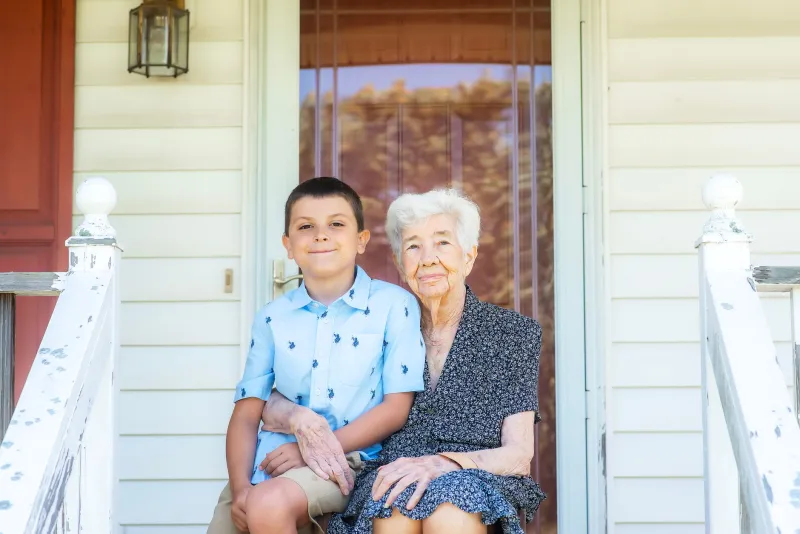
There's a particular kind of knowing that lives in the hands. Ask anyone who grew up in a rural household before the 1960s and they'll probably describe a grandmother or great-aunt who could press the back of her wrist to your forehead and tell you — with reasonable confidence — whether you needed bed rest, bone broth, or a trip to see the county doctor. No thermometer. No chart. Just skin against skin, attention, and decades of quiet observation.
That kind of medicine had a name once, even if nobody called it that formally. It was sensory assessment — the practice of reading a sick body through touch, taste, smell, and careful conversation. And before blood panels and digital readouts became the shorthand for health, it was how most Americans understood what was happening inside themselves and each other.
The Forehead, the Wrist, and the Art of Feeling Heat
The thermometer wasn't widely available in American homes until well into the twentieth century. Before that, fever was something you felt — and the people doing the feeling had developed real skill at it.
The back of the wrist was preferred over the palm because the skin there is thinner and more sensitive to temperature gradients. Experienced caregivers could distinguish between the dry, radiating heat of a high fever and the clammy, fluctuating warmth of something lower-grade. They noticed whether the heat was concentrated at the temples or spread evenly across the face. They watched whether the ears were red.
This wasn't folklore dressed up as medicine. It was pattern recognition built through repetition — the same cognitive muscle that modern clinicians use when they talk about developing clinical intuition. The difference is that in the old system, that intuition lived in the home, not the hospital.
Tasting Salt: What the Skin Told Healers That Labs Couldn't Yet Confirm
Here's something that tends to surprise people: for generations, caregivers — particularly mothers and midwives — would press their lips to an infant's forehead or cheek and taste the salt on the skin. It sounds strange now, but it had genuine diagnostic logic behind it.
Excessively salty sweat was understood, at least experientially, to signal something wrong with the body's mineral balance or fluid regulation. We now know that unusually salty skin in infants is one of the hallmark signs of cystic fibrosis — a disease that wasn't formally characterized until 1938 and wasn't widely screened for until decades after that. But mothers in Appalachian communities, in German immigrant households, in tight-knit Southern towns, had been noting this pattern long before any laboratory confirmed it.
The sweat test used to diagnose cystic fibrosis today is, at its core, a refined version of what those women were doing on instinct. The science caught up to the sensation.
Skin taste and texture also told caregivers about dehydration — dry, papery skin that didn't spring back quickly when pinched, lips that cracked at the corners, a tongue that looked coated or unusually pale. These were the instruments. The body was the chart.
The Porch as a Diagnostic Room
Maybe the most underrated tool in the old American health system was conversation — specifically, the slow, unhurried kind that happened on front porches and kitchen stoops.
Before appointment slots and intake forms, the neighborhood healer (whether that was a doctor who made house calls, a trusted elder, or simply the woman on the block who always seemed to know what to do) would talk to a sick person for a while before doing anything else. And the talking was itself a form of examination.
They listened for changes in speech — slurring, hesitation, an unusual flatness of affect. They watched how a person moved when they stood up from the chair. They noticed whether someone who was usually talkative had gone quiet, or whether someone who was usually sharp seemed foggy. They asked about sleep, appetite, and the last time things felt normal.
This is, in essence, what we now call a patient history. The difference is that in the old model, it happened in a familiar setting, with someone who already knew the baseline. Your front-stoop healer didn't need you to fill out a form describing your normal energy levels because she'd watched you hang laundry every Tuesday for fifteen years.
That relational context made the diagnostic picture richer. Deviation from a known norm is easier to spot than deviation from a statistical average.
What Modern Holistic Practitioners Are Bringing Back
Across the country, a quiet movement is underway among integrative health practitioners, nurse practitioners, and functional medicine doctors who are deliberately reintroducing sensory assessment into their practices.
Pulse diagnosis — a cornerstone of both Traditional Chinese Medicine and Ayurvedic practice — is gaining renewed attention in Western wellness circles. It involves reading not just the rate of the pulse but its quality: whether it feels wiry or soft, shallow or deep, rapid or slow in a way that goes beyond counting beats per minute. Tongue diagnosis, similarly, is being used by some practitioners as a window into digestive health, inflammation, and hydration status.
Some osteopathic physicians, trained in a tradition that has always emphasized hands-on assessment, are pushing back against the trend toward purely data-driven diagnosis. They argue that palpation — feeling the body's tissues, tensions, and asymmetries — communicates things that imaging sometimes misses, especially in early-stage musculoskeletal dysfunction.
And the conversation piece? Therapists and integrative health coaches are spending more time in open-ended dialogue before jumping to protocols, recognizing that the symptoms a patient volunteers when given unhurried space are often different from what they report on a checkbox intake form.
Relearning to Read the Body
None of this is an argument against modern diagnostic medicine. Blood tests save lives. Imaging catches things that no hand or conversation ever could. That's not the point.
The point is that something was lost when we outsourced all of our body-reading to machines — a kind of engaged, embodied attention that made health feel less like a data management problem and more like a relationship. A relationship between a person and their own body. Between a caregiver and the person in their care.
Your great-grandmother didn't need a number to tell her you were running a fever. She needed to pay attention. And she did — because paying attention was the only tool she had.
There's something worth salvaging in that. Not the limitations, but the attentiveness. The willingness to slow down, touch, listen, and trust that the body is always communicating — if you're willing to learn its language again.