Roots, Jars, and Rebellion: How a Generation of Young Americans Is Ditching the Supplement Aisle for Homemade Herbal Medicine
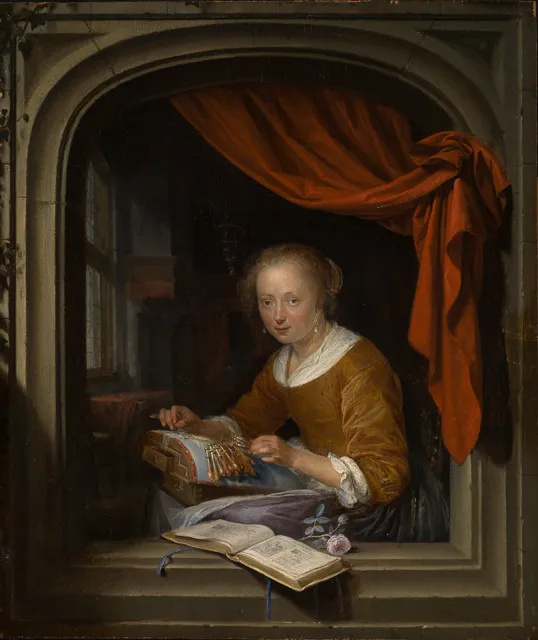
Photo: Gerrit Dou, Public domain, via Wikimedia Commons
Walk into any well-stocked pharmacy today and you'll find entire aisles devoted to supplements — glossy bottles promising energy, immunity, sleep, and focus. Most of them cost a small fortune. Many of them contain ingredients your great-grandmother would have grown in a window box without a second thought.
Something about that gap has started to bother a lot of young Americans. And they're doing something about it.
Across the country, Gen Z and younger millennials are quietly — and sometimes very loudly on social media — teaching themselves traditional herbalism. They're learning to make tinctures, craft salves, brew medicinal infusions, and stock their own small apothecaries. It's part practical frugality, part philosophical rebellion, and part a genuine hunger for a more direct relationship with the things they put into their bodies.
What Is This, Actually?
Let's be clear about what we're talking about. This isn't the crystal-and-vague-vibes corner of wellness culture. Modern herbalism, at least the kind gaining serious traction among younger practitioners, is grounded in real botanical knowledge — the kind that underpinned American healthcare for well over a century before pharmaceutical companies became the dominant force in medicine.
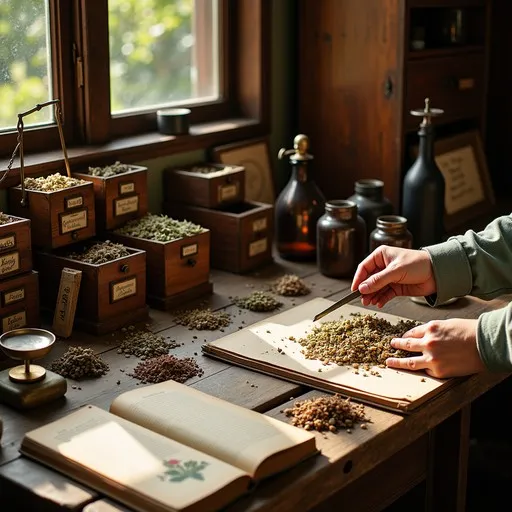
A tincture, for example, is simply a plant extract made by soaking dried or fresh herbs in alcohol or glycerin, drawing out their active compounds over several weeks. A salve is an infused oil combined with beeswax. An herbal infusion is, at its most basic, a very intentional cup of tea — steeped longer, prepared more carefully, and consumed with a specific purpose in mind.
None of this is exotic. All of it was completely ordinary in American homes until roughly the mid-twentieth century.
TikTok Didn't Invent This — But It Sure Spread It
Search #herbalism on TikTok and you'll find millions of posts. Young creators are filming themselves wildcrafting elderberries, explaining the difference between nervine herbs and adaptogens, and walking their followers through step-by-step tincture-making tutorials in small apartments and suburban kitchens.
It's a fascinating inversion of how this knowledge used to travel. For most of human history, plant medicine was passed down through direct relationship — grandmother to granddaughter, healer to apprentice, neighbor to neighbor. That chain broke somewhere in the twentieth century, when professional medicine consolidated authority and folk knowledge got quietly dismissed as superstition.
Now, a seventeen-year-old in Ohio can learn to make a proper echinacea tincture by watching a twenty-three-year-old in Oregon explain it over a lo-fi playlist. The democratization is real, even if it comes with the usual caveats about misinformation.
Herbalism educators have noticed the shift. Community herbalism programs and online certificate courses — once niche offerings with modest enrollment — have seen significant interest spikes in recent years, with a noticeably younger demographic showing up. Students who might once have defaulted to a pre-med track are choosing to study botanical medicine alongside it, or instead of it entirely.
The Supplement Skepticism Factor
It would be naive to ignore the economic and cultural context here. The supplement industry in the United States is a multi-billion-dollar machine, and it operates with surprisingly little regulatory oversight. The FDA doesn't require supplement manufacturers to prove their products work before selling them — only to avoid making specific disease claims on the label. Third-party testing has repeatedly found that popular supplements contain far less of their advertised active ingredient than the label suggests, or in some cases, none at all.
For a generation already skeptical of institutions and acutely aware of corporate wellness marketing, that's a meaningful data point. If you can't fully trust what's in the bottle, why not make the bottle yourself?
There's also the cost factor. A quality standardized herbal extract can run fifteen to forty dollars a bottle. Dried organic herbs purchased in bulk, or better yet, grown at home, cost a fraction of that — and you know exactly what went into them.
What Does the Science Say?
Here's where it gets interesting, and where Yesterday Wellness has always tried to be honest: traditional plant remedies exist on a spectrum when it comes to scientific evidence.
Some of the most popular herbs in the DIY herbalism revival have genuinely robust research behind them. Elderberry preparations have shown real promise in reducing the duration and severity of cold symptoms in multiple clinical trials. Ashwagandha has accumulated a solid body of evidence for its effects on stress hormones. St. John's Wort has been studied extensively for mild to moderate depression, with results comparable to some pharmaceutical antidepressants in certain populations — though it also has meaningful drug interactions that any responsible herbalist will tell you about upfront.
Others are more in the category of plausible-but-under-studied. Skullcap, lemon balm, motherwort — these have long histories of traditional use for anxiety and sleep, and preliminary research is promising, but the large-scale human trials haven't fully caught up yet.
The honest takeaway is that traditional herbalism isn't magic, and it isn't uniformly proven. But it also isn't uniformly unproven. The old healers who developed these practices over centuries were doing empirical work — observing, adjusting, passing on what worked. That's worth taking seriously, even as we apply modern critical thinking to it.
The Safety Conversation Nobody Wants to Skip
Any responsible piece about DIY herbalism has to say this plainly: plants are not automatically safe because they're natural. Some herbs have real contraindications. Some interact with medications. Some are not appropriate during pregnancy. Dosage matters.
The best young herbalists making content online are actually pretty rigorous about this. They recommend starting with established references — books like Rosemary Gladstar's Medicinal Herbs or The Modern Herbal Dispensatory — before experimenting. They encourage working with a trained clinical herbalist for anything beyond basic wellness support. They are, in many cases, more careful and more transparent about limitations than the supplement label that just says "supports immune health" and calls it a day.
The knowledge gap that causes problems isn't usually among the dedicated learners. It's in the casual consumer who sees a viral video and assumes more is always better. That's a social media problem, not an herbalism problem.
Something Older Than the Pharmacy
There's a reason this trend resonates so deeply with the Yesterday Wellness ethos. For most of human history, and for most of American history specifically, people had a direct, embodied relationship with the plants that kept them well. They knew what grew in their region. They knew what their grandmothers reached for when a child had a fever or a cough that wouldn't quit. They participated in their own healthcare in a way that felt grounded and self-sufficient.
That knowledge didn't disappear because it stopped working. It disappeared because a different system became more profitable and more centralized. The fact that young people are reaching back for it — cross-referencing it with modern research, adapting it to contemporary life, and sharing it across digital back fences — feels less like a trend and more like a correction.
The apothecary apprentices of 2024 are making their tinctures in Brooklyn apartments and rural Arkansas kitchens, in college dorm rooms and suburban garages. They're doing something their great-grandmothers would have recognized immediately.
And honestly? That's kind of wonderful.