Idle Hands Were Never the Devil's Workshop: The Forgotten Therapy Hidden in Knitting, Whittling, and Quilting
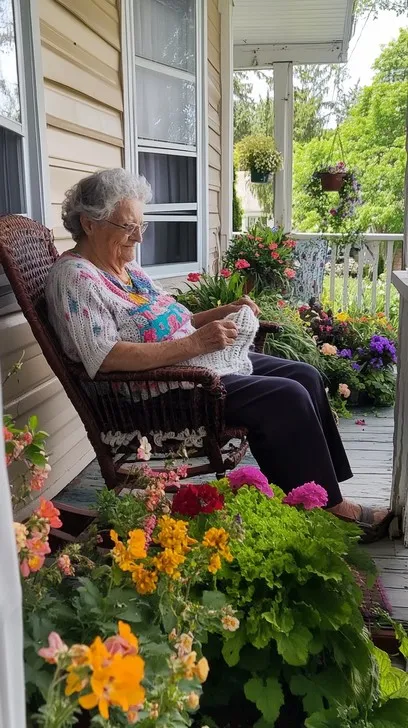
Photo: elderly woman knitting on porch vintage americana, via images.stockcake.com
Somewhere along the way, Americans got the idea that stillness was laziness. That if your body wasn't sweating and your calendar wasn't packed, you were falling behind. Productivity became the national religion, and anything that looked like sitting quietly — especially sitting quietly with yarn or a pocketknife — got quietly retired to the category of "old people stuff."
But here's the thing: those old people were onto something. The grandmothers rocking on porches with their knitting needles clicking, the grandfathers on the back steps slowly shaping a piece of pine into something beautiful — they weren't wasting time. They were doing something genuinely therapeutic. Something that calmed the nervous system, sharpened the mind, and kept loneliness at bay. And now, decades after we traded all of that for screens and productivity hacks, researchers are quietly confirming what those generations understood without needing a study to prove it.
The Rhythm That Calms Everything Down
There's a particular quality to repetitive hand-work that's hard to describe until you've experienced it. Knitting a row of stockinette stitch. Drawing a hand plane across a board. Stitching a quilt block. The motion is predictable, the hands stay busy, and the mind — interestingly — goes somewhere else entirely. Not blank, exactly. More like settled.
Neuroscientists have a name for this state. It sits right at the edge of the default mode network — the brain's resting state — and focused attention. You're engaged enough to stay present but not so taxed that stress hormones start spiking. Some researchers compare it to the mental state achieved during meditation or rhythmic breathwork. Your cortisol drops. Your heart rate steadies. The internal noise quiets down.
Our ancestors didn't have fMRI machines or cortisol assays. They just knew that after an evening of knitting or carving, they felt better. Sleep came easier. Worries seemed smaller. That wasn't coincidence — it was biology.
Hand-Work as America's Original Stress Management
Go back a hundred years in this country and you'd find hand-work woven into the fabric of daily life in ways that might surprise you. Women gathered for quilting bees — not primarily as social events, though they certainly were that — but as a structured way to get something useful done while keeping hands and minds in that calm, productive rhythm. Men whittled on porches after dinner, not because they particularly needed another wooden spoon, but because it gave them something to do with their hands while the day unwound.
During both World Wars, knitting for the troops became a nationwide movement. Millions of American women and men picked up needles and churned out socks, scarves, and balaclavas. The practical output was real, but so was the psychological effect. Keeping the hands busy gave people a sense of agency during deeply uncertain times. It was grounding in the most literal sense — anchoring the mind to the present moment through physical sensation.
This wasn't accidental folk wisdom. Even early 20th-century occupational therapists, working with veterans returning from combat, prescribed hand-work as part of recovery. Basket weaving, leatherwork, and woodcarving appeared in rehabilitation programs specifically because the repetitive, tactile nature of the work helped regulate shattered nervous systems. The hands, it turned out, had a direct line to the brain's calm-down circuitry.
What Modern Research Is Finally Saying Out Loud
In recent years, a quiet but compelling body of research has started validating these old practices. Studies on knitting, for example, have found that regular knitters report lower rates of depression and anxiety than non-knitters. A large survey conducted by the British Journal of Occupational Therapy found that the vast majority of respondents said knitting made them feel calmer and happier, with a significant portion crediting it with helping them manage chronic pain and depressive episodes.
Separate research on repetitive manual tasks has shown measurable reductions in anxiety and intrusive thoughts — the kind of mental chatter that modern life seems purpose-built to amplify. The theory is that repetitive movement, particularly when it involves fine motor coordination, activates the parasympathetic nervous system — the "rest and digest" counterpart to our overworked "fight or flight" response.
Woodcarving and whittling have attracted attention too, particularly in therapeutic contexts. Programs introducing carving to veterans dealing with PTSD have reported promising results, with participants describing the focused, sensory nature of the work as something that pulls them out of anxious rumination and into their bodies in a way that feels safe and manageable.
None of this would have surprised the average American household of 1935.
The Community Piece We Keep Forgetting
One thing the research sometimes undersells is the social dimension of traditional hand-work. Quilting bees, knitting circles, and woodworking clubs weren't just about the craft. They were structured reasons for people to gather, sit together, and talk — or not talk, which was equally valuable. There's something about having your hands occupied that lowers the social stakes. You're not sitting across from someone in an intense face-to-face stare. You're both just... doing a thing, side by side, and conversation happens naturally in the spaces between.
Psychologists sometimes call this "side-by-side" interaction, and it's particularly effective for people who find direct emotional conversations difficult — adolescents, men socialized to avoid vulnerability, anyone dealing with grief or anxiety. The shared task creates a container for connection that doesn't demand too much all at once.
This is part of why the decline of communal hand-work has had costs beyond just the loss of handmade goods. We lost the social structure that came with it — the regular gathering, the shared rhythm, the easy intimacy of sitting with people you trust and making something with your hands.
Getting Your Hands Back
The good news is that none of this requires special equipment or a particularly steep learning curve. Whittling needs nothing more than a decent knife and a dry piece of softwood — basswood is forgiving for beginners. Knitting can be learned in an afternoon from a YouTube tutorial or a patient neighbor. Quilting, embroidery, rug hooking, hand weaving — all of these have seen genuine revivals in recent years, with younger Americans picking them up not out of nostalgia exactly, but out of a hunger for something that feels real and tactile in a world that increasingly isn't.
If you want the full ancestral experience, skip the solo YouTube rabbit hole and find a local group. Knitting circles exist in most American cities and towns, often meeting in libraries, coffee shops, or community centers. Woodworking clubs have had a resurgence too, partly driven by the maker movement. Even a casual arrangement with a friend or two — sitting together on a porch or at a kitchen table, each working on something with your hands — captures more of what made these practices powerful than any app or wellness subscription ever could.
Slow Hands, Quieter Mind
We've spent decades telling ourselves that stillness is wasted time and that our hands should either be typing or idle. But the old way of thinking about this was richer and more honest. A pair of hands that were busy with something purposeful — something rhythmic, tactile, and made — were hands attached to a calmer nervous system, a more grounded mind, and a person who probably slept better that night.
Your grandmother's knitting basket wasn't a hobby collection. It was a medicine cabinet. And it's been sitting in the attic long enough.