The Room That Used to Stay Quiet: What We Lost When America Stopped Treating Silence as Medicine
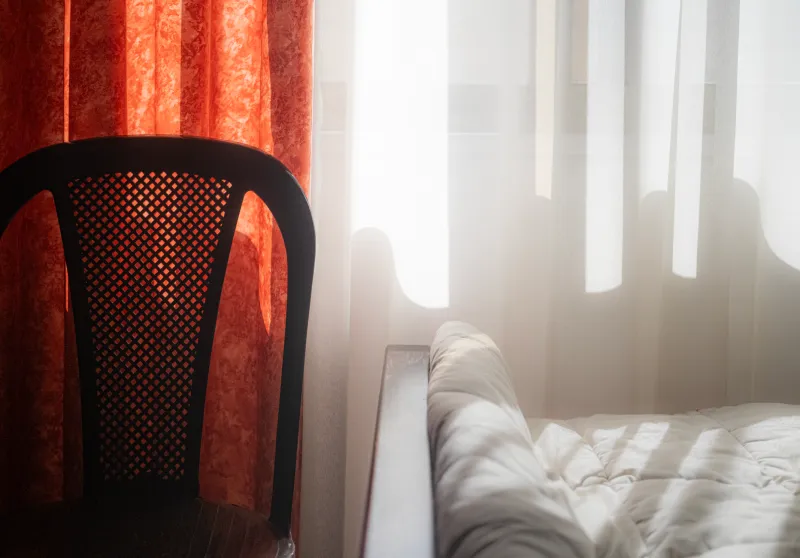
There's a moment, if you've ever visited an old farmhouse or stayed in a pre-war home, where you notice something strange. A room that doesn't quite make sense. Maybe it's off the hallway, or tucked behind the parlor. Small, simply furnished, oddly removed from the rest of the house. If you ask someone old enough to remember, they might tell you: that was the sick room. And the first rule of the sick room was quiet.
Not meditation. Not guided breathing. Not lo-fi hip hop beats. Just — nothing. Actual silence, treated as deliberately as any tonic or poultice.
We've mostly forgotten that room. And a growing number of researchers, physicians, and worn-out Americans think we're paying for it.
When Quiet Was a Prescription
Through much of the 19th and early 20th centuries, American domestic medicine operated on a set of principles that sound almost radical today. Rest was literal. Darkness was therapeutic. And silence wasn't a luxury — it was a clinical instruction.
Physicians of the era regularly prescribed what they called "rest cures," and while those treatments had their own complicated history, the underlying logic included something we've largely abandoned: the idea that the nervous system needed genuine sensory relief to heal. Florence Nightingale, whose influence shaped American nursing practice well into the 20th century, wrote with striking specificity about noise as a source of harm to sick patients — not just loud noise, but unnecessary noise. Whispering outside a patient's door, she argued, was worse than speaking normally, because the effort of straining to hear created its own kind of stress.
American households took this seriously. Visitors were hushed. Clocks were sometimes stopped or moved. Children were shooed outside. The street-facing windows might be draped. The message was clear: healing requires an environment, and that environment starts with silence.
The Science That's Catching Up
For a long time, this looked like folk superstition — the kind of thing that made sense before we had real medicine. Then researchers started actually measuring what silence does to the body, and the results were hard to dismiss.
A study published in the journal Heart found that two minutes of silence was more effective at reducing physiological markers of stress than listening to "relaxing" music. That's not a small finding. It suggests that the absence of sound does something active — not passive — to the nervous system.
More recently, neuroscientist Imke Kirste at Duke University discovered, almost accidentally, that periods of silence in mice led to the development of new cells in the hippocampus — the region of the brain associated with memory and learning. The control group, which listened to various types of sound including music, didn't show the same effect. Silence, it turned out, wasn't neutral. It was generative.
And then there's the cortisol angle. Chronic noise exposure — the kind most Americans now experience as a baseline condition of daily life — is consistently linked to elevated cortisol levels, disrupted sleep architecture, cardiovascular strain, and even metabolic changes. Your body treats persistent background noise as a low-grade threat. It never fully stands down.
Your great-grandmother didn't know any of this in those terms. But she understood the principle.
What Filled the Silence (And Why)
The transition away from quiet didn't happen all at once. It crept in the way most lifestyle shifts do — one convenience at a time.
Radio arrived in American living rooms in the 1920s, and by the 1950s, having the television on as background noise became a cultural norm rather than an exception. Open-plan offices replaced quiet private workspaces in the name of collaboration. Restaurants discovered that louder environments made people eat faster and order more drinks. Grocery stores, gyms, waiting rooms, and elevators all adopted the ambient soundtrack as a default.
Now we carry it with us. Earbuds in on the walk to the car. A podcast in the shower. Music in the kitchen. Notifications from six different apps before we've finished our first cup of coffee. The average American adult is exposed to somewhere between six and ten hours of media audio every single day — and that's before you count the involuntary kind, the traffic and the HVAC hum and the neighbor's leaf blower.
We didn't decide silence wasn't valuable. We just never got around to defending it.
The Quiet Room Reinvented (At a Price)
Here's the part that would probably amuse your grandparents: silence has become a premium product.
Floatation tanks — sensory deprivation chambers filled with body-temperature saltwater — charge anywhere from $60 to $120 an hour in most American cities, with waitlists in major metros. High-end spas now advertise "silent treatment rooms" and "acoustic sanctuaries" as distinct upsell offerings. Some progressive medical practices have started incorporating what they call "quiet rooms" — spaces specifically designed with sound-dampening materials where patients can decompress before and after appointments. A handful of forward-thinking hospitals, particularly in pediatric and oncology units, have begun implementing quiet hours, reducing overhead announcements and dimming hallway lights during nighttime hours. Outcomes, in several documented cases, have measurably improved.
In other words, we've commodified the thing that used to just be... Tuesday afternoon in a well-run household.
How to Reclaim It Without Paying for It
The good news is that silence doesn't require a spa membership. It requires intention — which is harder than it sounds, but cheaper.
Old American households that maintained quiet rooms or quiet hours did so through social agreement. Everyone in the household understood: this time, this space, is different. Visitors respected it. Children learned it. It was a cultural norm before it was a clinical intervention.
You can rebuild that on a smaller scale. It doesn't take a dedicated room, though if you have one to spare, the investment in some basic acoustic dampening is worth it. It starts with choosing one period each day — even fifteen or twenty minutes — where no audio plays, no phone is checked, and no ambient noise is invited in. Not meditation, necessarily. Not even intentional stillness. Just the absence of manufactured sound.
Sit with it. Let the ambient sounds of the actual world — wind, birds, the creak of your house settling — be what they are. Let your nervous system remember what it feels like to not be processing something.
Your body, it turns out, knows exactly what to do with quiet. It always did. We just stopped giving it the chance.
The Loudest Thing We Gave Up
There's something worth sitting with in the fact that we now pay professionals to give us access to something our great-grandparents treated as basic domestic wisdom. The sick room, the quiet hour, the unspoken household rule about keeping things calm — these weren't luxuries. They were expressions of a culture that understood the body as something that needed tending, not just treating.
We got very good at treating. We got worse at tending.
Maybe the most honest thing you can do for your health this week isn't a new supplement or a new workout. Maybe it's closing a door, turning off a speaker, and letting a room stay quiet for a little while.
Your nervous system will know what it means. It remembers, even if we forgot.