Sundown Was the Clock: How America's Old Work Rhythms Built Healthier Bodies and Tighter Communities
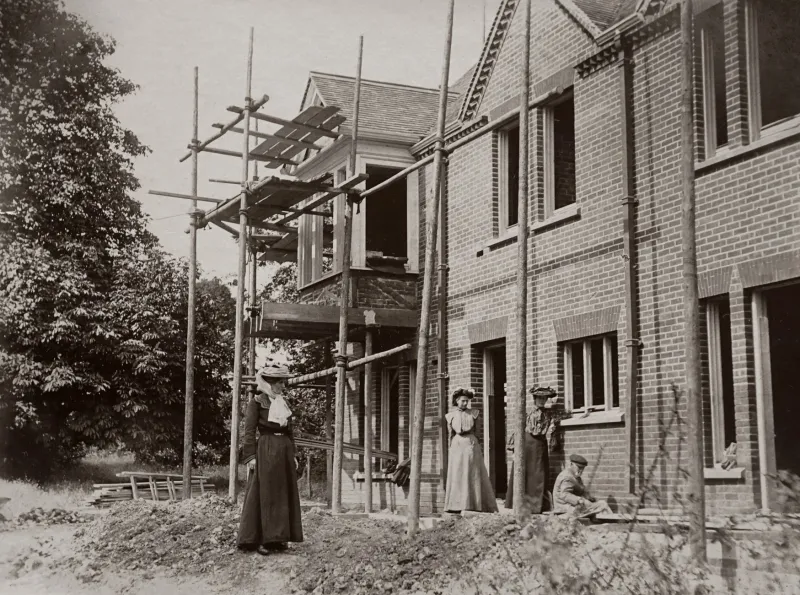
There's a particular kind of tired that feels earned. The kind your great-great-grandfather probably knew well — the bone-deep satisfaction of stopping when the light gave out, sitting down at a table with people he recognized, and letting the dark do its job. That rhythm isn't nostalgia. It was, for most of American history, just how life worked. And it may have been doing more for human health than we ever gave it credit for.
Today, the average American knowledge worker checks email after 10 p.m. Shift workers bounce between nights and days on rotating schedules that would have baffled a 19th-century farmer. The concept of a workday with a hard stop — a real one, not a calendar invite that says "OOO" while you're still answering Slack messages — has become almost quaint. But the bodies doing all that working haven't changed much. They still run on the same ancient rhythms that told your ancestors to put down the plow.
When the Sun Was the Foreman
Pre-industrial American labor was, by modern standards, brutally physical. Farming, logging, fishing, blacksmithing — none of it was easy. But here's what rarely gets mentioned: it was also structured by something no manager could override. Daylight.
Before artificial lighting made the night optional, the arc of the sun governed when work started and when it stopped. Farmers rose at or before dawn and, critically, they stopped when dusk arrived — not because they lacked ambition, but because continuing simply wasn't possible. Candles and oil lamps were expensive, dim, and fire-prone. Darkness was a genuine boundary.
This created something modern productivity culture has almost entirely dismantled: a daily endpoint that wasn't negotiable. Work had a shape. It had edges. And within those edges, the body knew what to expect.
Seasonal rhythms layered on top of daily ones. Winter meant shorter days and, in agricultural communities, dramatically reduced workloads. Historians of American rural life have documented how January and February functioned almost like a collective exhale — time for mending tools, visiting neighbors, telling stories, and sleeping longer than any other month of the year. The body got a genuine off-season.
What That Rest Was Actually Doing
Modern sleep and stress research has started catching up to what those old rhythms were accomplishing without anyone calling it "wellness."
Cortisol — the hormone most associated with stress — follows a daily curve. It peaks in the morning to get you moving and is supposed to taper steadily toward evening, hitting its lowest point in the early hours of sleep. That curve is exquisitely sensitive to light exposure and activity patterns. When work bleeds into the evening, when screens mimic daylight at 11 p.m., that curve gets flattened or distorted. The body never fully downshifts.
Chronobiologists — scientists who study biological time — have spent decades documenting what happens when humans work against their circadian rhythms. The short list includes elevated inflammation, impaired glucose metabolism, suppressed immune function, and higher rates of cardiovascular disease. The long list is considerably grimmer.
Conversely, studies on communities that maintain more time-bounded work patterns — certain agrarian populations, some European countries with strong labor protections, even specific occupational groups — tend to show better sleep quality, lower rates of burnout, and in some longitudinal studies, measurably longer lives. The research isn't perfectly tidy, but the direction it points is consistent: the body does better when work stops on a schedule the nervous system can anticipate.
Immigrant and Rural Communities Held the Line Longer
Not everyone surrendered these rhythms at the same pace. Immigrant communities arriving in the late 19th and early 20th centuries often brought Old World work customs with them — Sunday rest that was genuinely observed, seasonal festivals that doubled as mandatory downtime, meal times that were non-negotiable and communal.
Italian-American families in urban neighborhoods maintained the tradition of the long midday meal well into the mid-20th century. Jewish communities observed Shabbat with a seriousness that created a 25-hour weekly hard stop, regardless of economic pressure. Rural Black communities in the South, even under conditions of enormous hardship, often preserved harvest-season communal rhythms — the kind where neighbors showed up to help and stayed to eat, where the work itself was wrapped in social fabric that made rest feel like reward rather than weakness.
These weren't just cultural preferences. They were, in retrospect, sophisticated stress-management systems that kept communities physically and mentally intact under conditions that might otherwise have broken them.
The Productivity Myth We're Still Paying For
The industrial revolution didn't just change how Americans worked — it changed how they thought about work. The factory clock replaced the sun. Shifts replaced seasons. And somewhere in that transition, rest got repositioned from a biological necessity to a personal failure.
The hustle mythology that followed — and that social media has turbocharged into something almost religious — tells us that boundaries around work are laziness in disguise. Sleep less, grind more, optimize everything. But the data keeps pushing back.
A widely cited Microsoft study found that productivity among knowledge workers drops sharply after about six hours of focused work. Research from Stanford economist John Pencavel showed output per hour declining steeply beyond 49 hours per week, and falling off a cliff past 55. Beyond that threshold, you're essentially working for free — burning hours without producing results, while accumulating the kind of chronic stress load that shows up in your bloodwork years later.
Your great-grandmother's husband, stopping work at sundown, may have been clocking fewer hours than his modern counterpart. He also may have been getting more done during those hours — and walking away with a nervous system that had time to repair itself overnight.
What Bringing Back the Boundary Might Look Like
Nobody's suggesting you give up electricity or wait for the harvest moon to schedule your deadlines. But there are practical takeaways buried in the old patterns that don't require moving to a farmstead.
The most consistent finding across chronobiology, burnout research, and occupational health is simple: the body benefits enormously from knowing when the day ends. Not a soft ending that drifts into one more email, but a genuine stop — a transition ritual that signals to the nervous system that the effort is over.
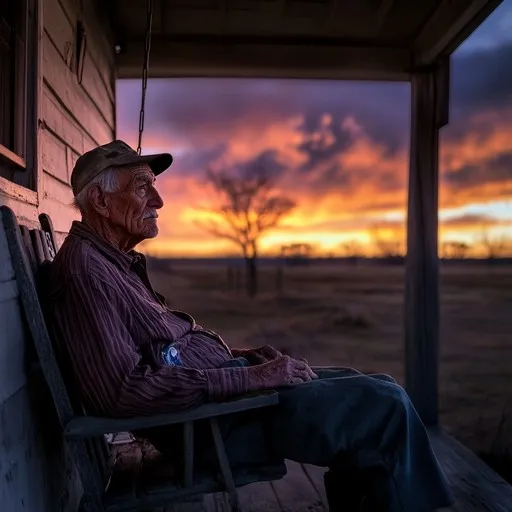
Old American households had these transitions built in. The evening meal. The porch sit. The lamp being lit and the book being opened. These weren't just pleasant habits — they were neurological cues that shifted the body out of alert mode and into recovery mode.
Some people are reclaiming versions of this deliberately: a phone-off rule after a certain hour, an evening walk that serves as a physical close to the workday, a return to cooking dinner as something that requires presence rather than just a meal delivery app. Small moves, but the physiology behind them is the same physiology that let your ancestors wake up rested and do it all again.
The Sun Still Sets
Here's the thing about all those old rhythms — they didn't ask for your opinion. The sun went down whether the harvest was finished or not. The body needed sleep whether the ledger balanced or not. There was a humility baked into pre-industrial life that modern culture has largely abandoned: the acknowledgment that human beings are not machines, and that rest is not a reward for finishing. It's the condition that makes finishing possible.
The economics of rest aren't complicated. They never were. You spend energy, you replenish it. You work hard, you stop. Communities that understood this built something durable — not just in their fields and workshops, but in their bodies and their relationships.
The sun still sets every evening. It's still an invitation. Most of us just stopped answering it.