The Man Behind the Counter Who Knew Your Whole Story: America's Forgotten Pharmacist-Healer
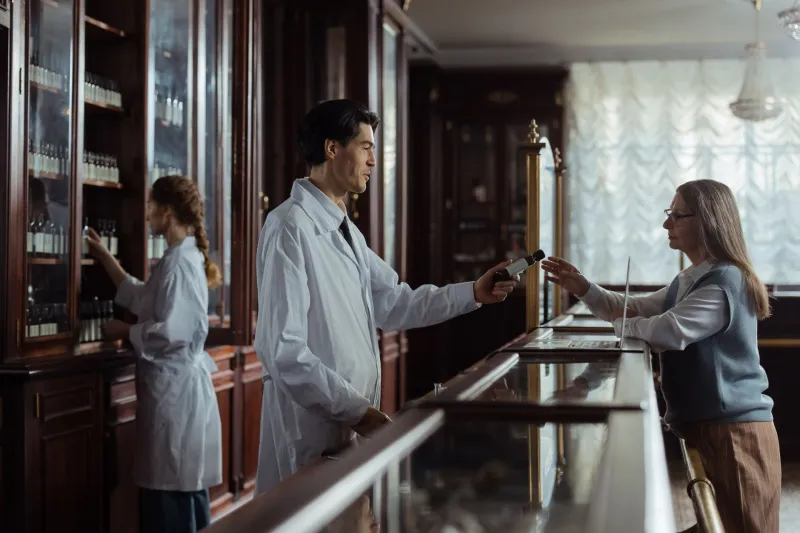
Walk into most chain pharmacies today and you'll hand over a slip of paper, wait twenty minutes under fluorescent lights, and collect a stapled bag with a printout longer than a lease agreement. Nobody asks how you've been sleeping. Nobody remembers that your mother had the same cough every winter. Nobody knows your name unless it's typed on a label.
It wasn't always this way.
For the better part of two centuries, the American druggist was something far more interesting than a dispenser of prescribed medications. He — and eventually she — was the first stop for the worried, the ailing, and the curious. A trusted neighbor in a white coat who blended knowledge of botany, chemistry, and plain human observation into something that looked a lot like genuine healing.
The Apothecary Tradition That Crossed the Atlantic
The roots of the neighborhood pharmacist run deep. European apothecaries had been compounding remedies, advising patients, and filling a role somewhere between healer and shopkeeper since the Middle Ages. When that tradition landed on American soil, it adapted fast. In small towns and city neighborhoods alike, the druggist became a cornerstone of community health — especially in places where a physician was miles away or too expensive to visit for every sniffle and sore joint.
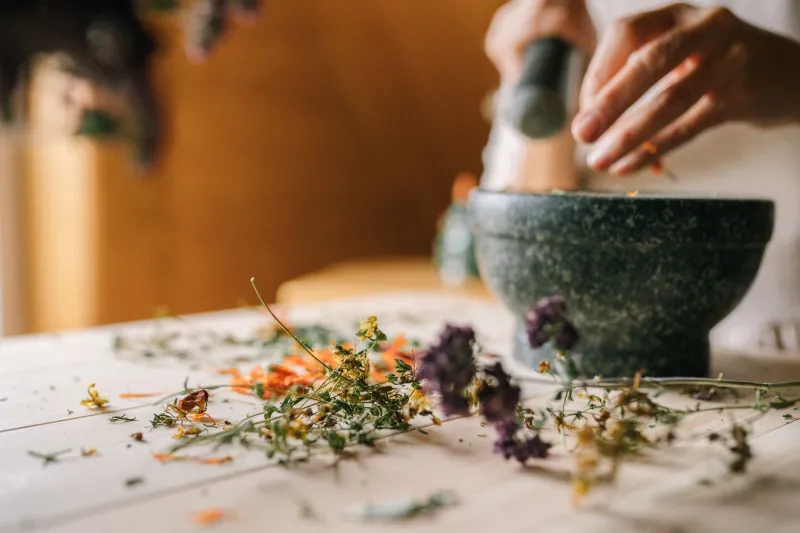
Through the late 1800s and well into the mid-twentieth century, the local pharmacy was a hub. The soda fountain up front wasn't just nostalgia bait — it was a gathering place where people talked about their health openly, casually, the way you'd talk about the weather. And the man behind the counter listened. He compounded tinctures from willow bark for fevers, mixed zinc-based salves for skin troubles, and kept a mental file on every family in a six-block radius.
This wasn't guesswork. Early American pharmacists trained extensively in materia medica — the study of medicinal substances, many of them botanical. They understood dosing, interactions, and the limits of their own knowledge. They also understood when to send someone to a doctor rather than reach for a mortar and pestle.
More Than Pills: The Art of the Consultation
What made the old-school pharmacist genuinely different wasn't just what he knew. It was how he practiced.
He asked questions. He looked at you. He noticed if you'd lost weight since March or if the dark circles under your eyes were new. He remembered that your husband had heart trouble and that your youngest had a tendency toward ear infections every fall. That accumulated knowledge — what we'd now call longitudinal health data — was stored not in a cloud server but in a human brain that also happened to be attached to a compassionate person who lived in your community.
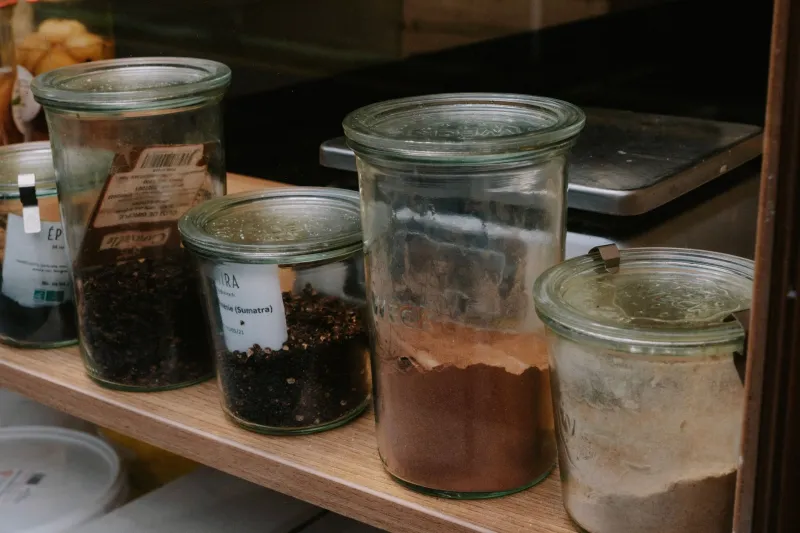
For minor ailments, the druggist's counter was the first line of defense. Digestive trouble, skin irritations, persistent coughs, mild anxiety, seasonal allergies — these were handled with a conversation, a recommendation, and often a custom-compounded remedy. Herbal preparations were standard tools of the trade. Valerian for sleep. Slippery elm for sore throats. Chamomile and peppermint for stomach complaints. These weren't folk superstitions — they were the evidence base of the era, drawn from decades of observed outcomes in real patients.
The transaction was also deeply personal. You didn't describe your symptoms to a dropdown menu. You described them to someone who might have known you since childhood, who might have compounded your grandmother's heart tonic, who had a stake in your wellbeing that went beyond a customer service metric.
When the Counter Went Cold
So what happened?
The short answer is scale. The longer answer involves insurance companies, corporate consolidation, and a regulatory environment that — however well-intentioned — gradually squeezed out the space for pharmacist judgment.
After World War II, pharmaceutical manufacturing industrialized rapidly. The era of the compounding pharmacist gave way to the era of the pre-manufactured pill. Chain drugstores began absorbing independent pharmacies through the 1960s and 70s. By the 1980s and 90s, the economics had shifted decisively. Volume was the business model. Throughput replaced conversation. The pharmacist's role narrowed — legally, institutionally, and practically — to verifying prescriptions and flagging contraindications.
Insurance bureaucracy finished the job. When every transaction flows through a third-party payer with its own protocols and preferred drug lists, the pharmacist's discretion shrinks to almost nothing. The idea of a druggist recommending a botanical tincture or spending fifteen minutes discussing a patient's stress levels became not just unusual but professionally risky.
The soda fountain closed. The consultation counter disappeared. And with it went something that's genuinely hard to replace: the accumulated, personalized, community-embedded health knowledge of a trusted neighbor.
What the Science Now Says About What We Lost
Here's the irony. A lot of what those old pharmacists recommended has held up remarkably well under modern scrutiny.
Willow bark's salicin is the chemical precursor to aspirin. Valerian root has demonstrated measurable effects on sleep latency in multiple clinical trials. Slippery elm's mucilaginous compounds do soothe irritated mucous membranes — exactly as generations of druggists claimed. Chamomile's apigenin binds to benzodiazepine receptors in the brain, which explains why it calms people down.
The botanical knowledge those pharmacists carried wasn't mysticism. It was empirical medicine built on centuries of observation. The tragedy isn't that it was primitive — it's that it was abandoned before we fully understood why it worked.
Beyond the remedies themselves, research on continuity of care consistently shows that patients with long-term relationships with a single healthcare provider have better outcomes across almost every metric. They're more likely to catch problems early, more likely to follow through on treatment, and more likely to be honest about what's actually going on. The old neighborhood pharmacist, with his encyclopedic knowledge of every family on the block, was practicing continuity of care before the term existed.
The Quiet Revival Happening Right Now
Drive through certain neighborhoods — particularly in smaller cities and rural communities — and you'll still find independent pharmacies where the owner knows your name. But beyond those holdouts, something more deliberate is stirring.
Compounding pharmacies have seen a steady resurgence over the past decade, driven partly by patients who need customized dosing and partly by practitioners looking to move beyond the one-size-fits-all model. Integrative and functional medicine practices are increasingly partnering with pharmacists who have retrained in botanical medicine and nutritional therapeutics. Some states have expanded pharmacist scope of practice to allow more direct patient consultation — a quiet regulatory shift that's starting to look a lot like the old model.
Herbalists and naturopathic practitioners are also filling some of the gap, offering the kind of unhurried, whole-person consultations that the old druggist once provided at the counter between the aspirin display and the penny candy.
None of it is quite the same. The neighborhood pharmacist who compounded your grandmother's tonic and watched three generations of your family grow up is probably not coming back in that exact form. But the hunger for that kind of care — knowledgeable, personal, rooted in the community — hasn't gone anywhere.
A Different Way of Knowing You Were Sick
There's something worth sitting with here. The old pharmacist model assumed that health advice worked best when it was embedded in relationship. When the person giving you guidance had context, history, and a genuine investment in your wellbeing. When the transaction wasn't just clinical but human.
We traded that for efficiency. And efficiency has its virtues — nobody's arguing we should give up modern pharmacology. But somewhere in the pursuit of scale, we lost the thread of something older and, in its own way, quite wise.
Maybe the most useful thing we can do is remember what that counter stood for — and start asking a little more of the healthcare interactions we still have.