Gather, Chew, Heal: The Lost Power of the American Family Table
Somewhere between the invention of the TV tray and the rise of the smartphone, America quietly abandoned one of its most powerful health rituals. It didn't happen overnight. It crept in slowly — a dinner eaten standing at the counter, a meal scrolled through in silence, a teenager with earbuds in, a parent answering work emails between bites. And just like that, the family table went from sacred gathering place to optional furniture.
But here's the thing: that table was doing a lot more than holding casserole dishes.
For most of American history — and across nearly every culture that built it — the shared evening meal was less about food and more about rhythm. It was a daily ritual that regulated bodies, calmed nervous systems, and stitched communities together one conversation at a time. The science behind why is only now catching up to what our great-grandparents practiced by instinct.
What Used to Happen at 6 O'Clock
In the mid-20th century, the American dinner hour had a kind of gravity to it. Work stopped. Kids came in from outside. The kitchen smelled like something real. And everyone — grandparents, parents, kids, sometimes a neighbor or two — sat down at roughly the same time and ate together.
This wasn't just tradition for tradition's sake. There was a whole choreography to it that supported health in ways nobody was naming yet. Meals were eaten slowly, because conversation slows you down. Portions were served family-style, which meant people paid attention to hunger and fullness rather than just emptying whatever was in front of them. Elders modeled table manners that, it turns out, were also digestion instructions: sit up straight, don't rush, chew your food.
Old etiquette guides from the early 1900s read almost like a digestive health pamphlet. "Eat slowly and deliberately," advised one 1908 household manual. "Conversation at table aids the digestion by keeping the mind pleasantly engaged." They weren't wrong. They just didn't have the neuroscience vocabulary yet.
Your Nervous System at the Table
Here's what was actually happening physiologically when families sat down together without distraction: they were activating the parasympathetic nervous system — the "rest and digest" mode that allows the body to actually process food properly.
When we eat while stressed, distracted, or rushing, the body stays in a low-grade fight-or-flight state. Digestion gets deprioritized. Stomach acid secretion drops. Gut motility slows or becomes erratic. Nutrient absorption suffers. Over time, that pattern contributes to the kind of chronic digestive complaints that have become almost universal in modern America — bloating, reflux, irritable bowel, the whole uncomfortable catalog.
Conversation at the table, especially calm and familiar conversation with people you love, does the opposite. It signals safety. Heart rate steadies. Cortisol drops. Saliva production increases, which is actually the first step in carbohydrate digestion. The body gets the message: we are okay, we can rest, we can absorb.
That's not wellness-speak. That's basic physiology that got lost somewhere in the shuffle of modern life.
The Mental Health Piece Nobody Talks About
The psychological benefits of the shared family meal run even deeper. Research from the last two decades has consistently shown that children and teenagers who eat regular family dinners report lower rates of anxiety, depression, and substance use. They perform better in school. They have stronger communication skills and a more stable sense of identity.
But adults benefit too — and this part gets less attention.
There's something neurologically significant about having a predictable moment in the day when you are expected to show up, sit down, and be present with other people. It creates what psychologists call a "relational anchor" — a recurring experience of belonging that buffers against the kind of chronic low-grade loneliness that's been quietly devastating American health for decades.
Before therapy was a household word, before community mental health centers existed, before anyone had coined the phrase "social support network," the dinner table was doing that work. Every single night.
The Rituals That Made It Work
It wasn't just the eating that mattered. It was the whole ritual surrounding it.
Many families opened meals with a blessing or a moment of quiet — a practice that now reads almost like a mindfulness exercise. Others had a tradition of going around the table and sharing one thing from the day, which is strikingly similar to the "gratitude journaling" that modern wellness culture has repackaged and sold back to us.
The act of setting the table together, of passing dishes, of waiting for everyone to be served before starting — these small choreographies created a sense of shared purpose and mutual respect that extended far beyond the meal itself. Children learned to be patient. Adults practiced slowing down. Everyone practiced the lost art of being in the same room and paying attention to each other.
Some families kept a strict no-unpleasant-topics rule at dinner, not out of avoidance but out of an instinctive understanding that stress and digestion don't mix. Others used the table as the one place where hard things could be said, because the shared meal created enough safety to hold difficult conversations without them escalating.
What Modern Families Are Bringing Back
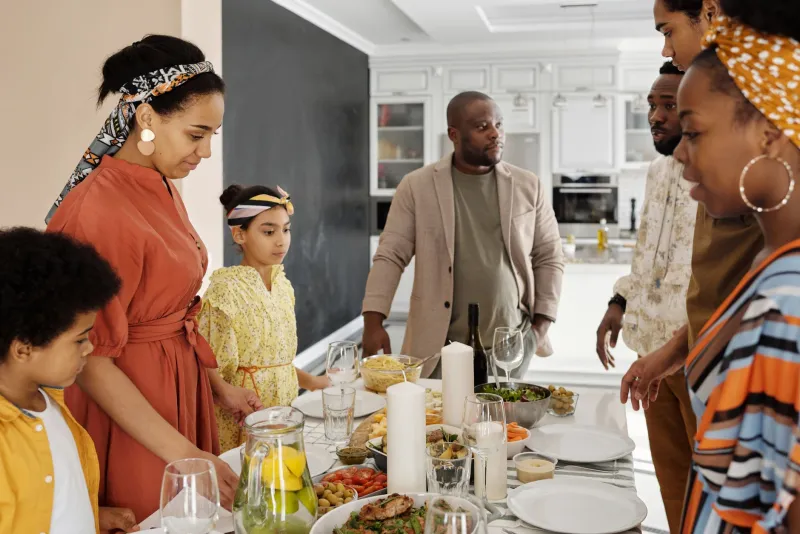
Across the country, a quiet revival is happening. Families who got tired of eating in parallel isolation — everyone on their own device, in their own corner — are reclaiming the dinner table with a kind of deliberate intention that their grandparents never needed to manufacture.
Some households have instituted phone baskets by the door. Others have returned to the old practice of cooking together before sitting down, because the act of preparing food side by side seems to ease the transition from the fragmented pace of the day into something slower and more connected. A few families have even dug out old recipe boxes from parents and grandparents, using familiar dishes as a way of pulling the past into the present.
The through line in all of it is intentionality — the recognition that the table doesn't just happen anymore. You have to choose it.
Bringing It Back to Your Own Kitchen
You don't need a formal dining room or a made-from-scratch meal to start. The research is clear that frequency and presence matter far more than perfection. Even three or four shared meals a week, eaten without screens and with some actual conversation, produces measurable benefits over time.
Start small. Put the phones in another room. Sit down at the same time. Ask a question that isn't yes-or-no. Let the meal take twenty minutes instead of seven.
Your digestion will notice. Your nervous system will notice. And if you do it long enough, consistently enough, the people sitting across from you will notice too.
The dinner table was never just furniture. It was medicine. And the beautiful thing is, it's still right there in your kitchen — waiting for you to come back to it.