Salt at the Door, Smoke in the Hall: The Everyday Threshold Rituals That Quietly Kept Americans Well
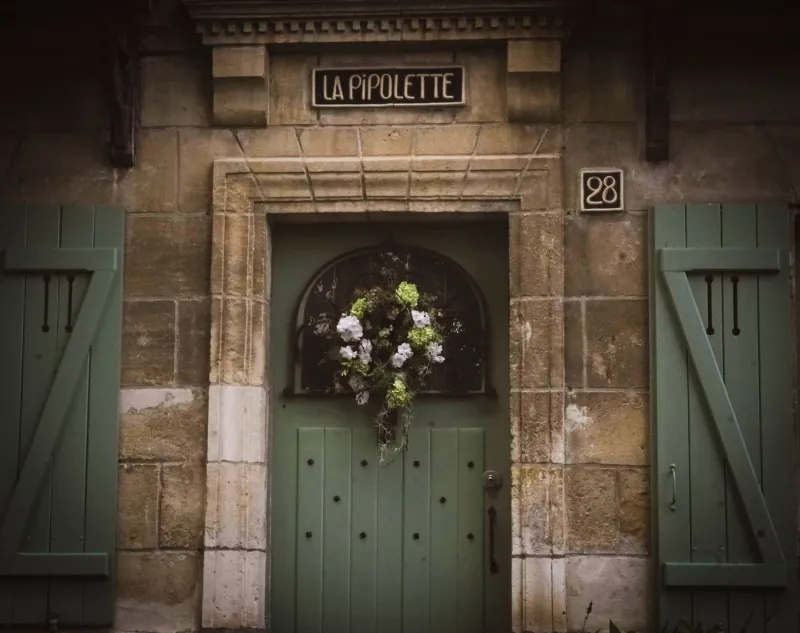
Somewhere between the front porch and the parlor, something important used to happen. Not a ceremony, exactly. No pastor, no cake, no photographer. Just a gesture — a handful of salt scattered across a doorsill, a bundle of dried herbs hung above a frame, a quiet pause before stepping inside after a hard day. These small, unremarkable acts were performed by millions of American families across generations, and almost nobody called them wellness practices. They were just what you did.
We've largely stopped doing them. And it's worth asking what we lost when we did.
What We Mean by a Threshold Ritual
A threshold isn't only a physical doorway, though it's often that. It's any liminal point — the seam between one state of being and another. The moment you leave the house in the morning. The first day of spring. The night before a child starts school. The return home after a funeral.
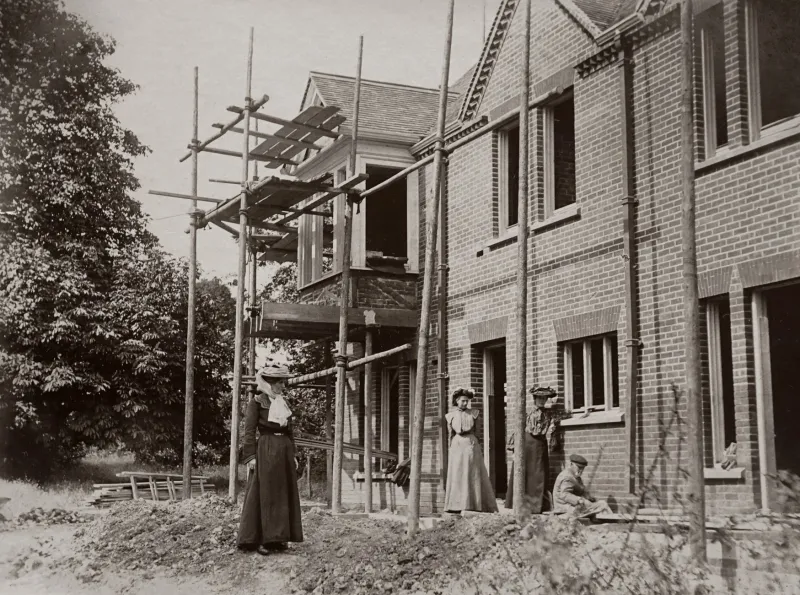
For most of human history, people understood instinctively that these seams deserved acknowledgment. American folk tradition, drawn from a wild mix of European immigrant customs, Indigenous practices, and African spiritual heritage, was absolutely saturated with small threshold observances. Most of them never made it into history books because they were considered too ordinary, too feminine, too domestic to record. They happened in kitchens and on back steps and in gardens, passed from grandmother to granddaughter in the same breath as pie crust recipes.
But they were there. And they were doing something.
The Salt Line and the Doorway Cross
Salt at the threshold is one of the oldest protective gestures in the American domestic tradition. Families from Appalachian hollows to New England farmsteads to Louisiana bayou communities all had some version of it. A thin line of coarse salt across the doorsill was meant to keep trouble out — illness, bad luck, malevolent spirits, depending on who you asked.
From a strictly material standpoint, salt at a doorway does essentially nothing to pathogens or misfortune. But that's not really the point, and it never was. The act of laying that salt line was a declaration: this house is protected, and I am its protector. It was a moment of agency in a world that offered very little of it. For a farmwife in 1890 who had no control over the weather, the crop prices, or whether her children would survive a hard winter, that small gesture was a form of psychological armor.
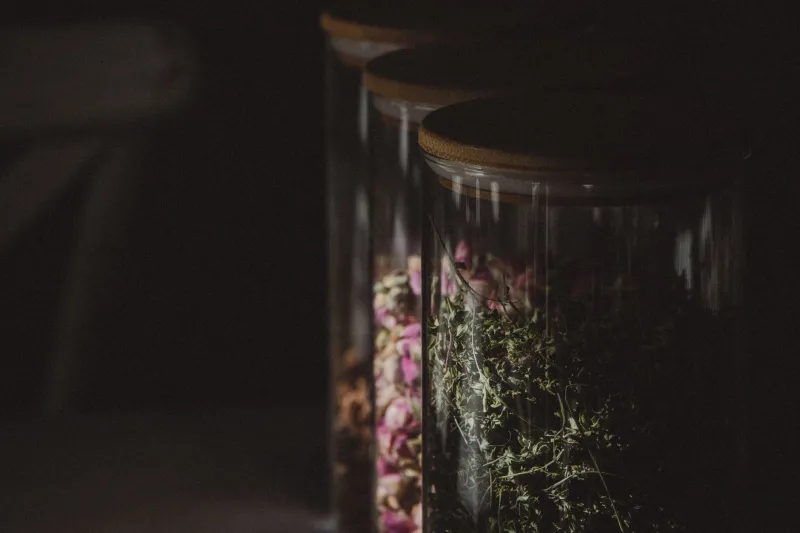
Similarly, the practice of hanging dried herbs — lavender, rosemary, rue, cedar — above doorframes wasn't purely decorative. These were olfactory anchors, releasing scent every time the door swung open. Smell is the sense most directly wired to the brain's emotional and memory centers. Walking through a rosemary-scented doorway every morning is, whether you know it or not, a neurological event.
Seasonal Doorways Were Taken Seriously
It wasn't only physical doors that got this treatment. Seasonal transitions — the ones we now mark with a social media post and a pumpkin spice latte — were once genuine community rituals anchored in health and renewal.
The arrival of spring meant opening windows that had been sealed all winter, beating rugs, airing bedding in the sun, and burning bundles of dried herbs to clear the stale air. This wasn't just cleaning. It was ceremony. There was a right order to it, a right time, often tied to the moon or the first warm wind. Crossing from winter into spring was considered a vulnerable moment for the body, a time when old illness could linger or new illness could take hold. The rituals were protective medicine dressed in the language of housekeeping.
Autumn brought its own set of threshold practices — preserving, sealing, preparing. The first frost was a doorway as real as any wooden frame. Families in rural communities would gather the last of the garden herbs before that frost, dry them, and hang them in bunches near the kitchen ceiling. The act of harvesting and hanging was itself a ritual of transition, a physical acknowledgment that one season was ending and the household needed to shift its rhythms accordingly.
What Neuroscience Has Started to Figure Out
Here's where it gets genuinely interesting. Researchers studying what's called the "doorway effect" — the well-documented phenomenon where walking through a doorway causes people to forget what they were just thinking about — have stumbled onto something our ancestors seemed to understand intuitively. Physical thresholds create what neuroscientists call "event boundaries" in memory and cognition. Your brain literally files a new mental folder the moment you cross from one space to another.
This is usually framed as a frustrating bug — why did I come into this room? — but it's also a feature. Event boundaries allow us to mentally close one chapter and open another. When you cross a threshold with intention, when you've marked it with an action or a gesture, you're essentially telling your nervous system: that was then, this is now. The psychological reset that follows is real and measurable.
Old threshold rituals were, in effect, a technology for managing that reset. Scattering salt, pausing to touch a hanging herb bundle, saying a blessing before entering — these acts forced a moment of conscious attention at exactly the point where the brain was already primed to shift gears. It's hard to imagine a more elegant design, even if the people practicing it had no idea they were doing neuroscience.
The Ritual of the Returning Body
One of the most quietly profound American threshold traditions was the practice of leaving the outside world outside. Removing shoes at the door is one surviving remnant of this, but older versions went further. Changing clothes before entering the main living space. Washing hands and face at an outdoor basin before crossing the threshold. In some traditions, a brief pause at the gate before approaching the house — a moment to mentally shed the workday before rejoining the family.
These weren't just hygienic practices, though they were also that. They were protocols for psychological decompression. The body was being asked to perform a transition, and the ritual made that transition conscious and complete. You didn't drag the argument you'd had at the mill into the kitchen with you — not because you'd forgotten it, but because you'd been given a physical cue to set it down at the door.
Compare that to the modern experience of walking directly from a work Zoom call to the dinner table, phone still in hand, never having crossed any kind of meaningful threshold at all. The blurring of spaces that defines contemporary life is also a blurring of mental states, and the cost to our nervous systems is something we're only beginning to measure.
Bringing the Practice Back, Simply
You don't need to believe in folk magic to reclaim the functional wisdom here. The mechanics are simple and the investment is almost nothing.
Try pausing for three seconds at your front door before entering your home after work. Just stop, take a breath, and notice the crossing. Hang something fragrant near your most-used doorway — a small bundle of dried rosemary or lavender from a farmers market will do. Mark the first day of each new season with a single deliberate act in your home: open a window, light a candle, rearrange something on a shelf. These aren't superstitions. They're invitations for your nervous system to update its sense of where and when it is.
Our great-grandparents didn't have the vocabulary of cognitive science, but they had something arguably more valuable: a felt understanding that the spaces between things matter. That passing from one state to another deserves a moment of recognition. That the body and mind need ceremony, even when — especially when — it's small enough to fit in a handful of salt.
The threshold is still there. We just forgot to stop at it.